Vexo Accounting logo
CALL US FREE
0333 567 2680

Get Your Trading Tax Return Right From the Start

Accountants For Traders

Financial Trading Accountants Across the UK

Trading Tax Accountants for Day Traders, Forex Traders, Investors & Sole Traders
Proactive Advice Fixed Fees Clear & Friendly Support
Excellent ★★★★★ 4.9 out of 5 Google Reviews

Get Your Free Consultation

Tell us about your business and we'll be in touch.

We respect your privacy. Your information is safe with us.

All-in-One Support

Accounts, tax, payroll & business advisory.

Our Dedicated Team

A single team that understands your business.

Cloud Accounting

Real-time data, secure and accessible.

Fixed, Transparent Pricing

No surprises. Just clear, fair fees.

Accountants For Traders

Vexo Accounting is a trading tax accountant working with financial traders right across the UK. Whether you run a small business, trade part-time, or trade as a sole trader through a company, we handle your capital gains tax, your income tax, and your tax return so you can spend more time trading and less time worrying about HMRC. We work with day traders, forex traders and spread bettors, and we speak your language.

Our accountants handle everything from day trading income to longer-term investments, and our services cover sole traders and limited companies alike. Most general accountants only see a handful of trades a year across a client's account. We see hundreds, sometimes thousands, of trades a year across our clients' accounts, and we know how to turn that into a clean, accurate tax return without you doing the heavy lifting yourself.

Ready to take the stress out of your finances
Ready to take the stress out of your finances?
Book a free consultation and discover how we can help your business thrive.

We Built Vexo Accounting Specifically To Support Financial Traders

Trading is not a normal source of income, and HMRC does not treat it like one. Your tax position depends on what you trade, how often you trade, and whether HMRC sees you as an investor or as someone running a trading business. HMRC increasingly expects traders to prove this is a real business, not a hobby.

Get that wrong, and you could pay more tax than you owe, or worse, have your return flagged for a compliance check. That is where helping financial traders comply with the rules becomes our full-time job, not a sideline. We work exclusively with financial traders and forex traders, not general small businesses, so we already know the questions to ask. Unlike generalist accountants, we only take on people who actually trade the markets.

Our accountants assist traders across the trading industry, from short term day trading to longer term investing, and we advise on compliance long before HMRC ever asks a question. We don't just give general tax advice; we give advice built around how you actually trade.

The Problems We See Most Often With Day Traders And Forex Specialists

Day traders and forex specialists tend to run into the same handful of issues every year. Their broker statements do not match neatly to a tax return template, and their trading activity often spans several platforms, several currencies, and more than one of the major asset classes.

Day trading brings a volume of transactions that most accountants never see. Most sole trader clients we take on have never had their trading accounts reviewed by an accountant who actually trades stocks, forex, and spread bets. Most accountants outsource trader clients to junior staff, and we don't. These are the services most general accountants can't offer. On top of that, working out allowable expenses and expense claims takes real knowledge of trading, not just general accounting. A generalist accountant can easily miss platform fees, data subscription costs, software costs or broker fees entirely.

How We Work Out Whether You Are Trading Or Investing

HMRC decides whether your profits count as capital gains or as trading income, and that single decision changes your whole tax bill. HMRC looks at how often you trade, how long you hold positions, and whether trading is your main source of income. If you trade at high frequency, HMRC applies stricter tests before accepting that you are simply investing.

Our accountants assess your trading activity against these tests as the first step in our process, before we touch your tax return. Get the classification right first, and everything else, from your personal allowance to your National Insurance position and any other assets you hold, falls into place.

Accountants For Traders
Ready to take the stress out of your finances
Ready to Take the Next Step?
Book a free consultation and discover how we can help your business grow.
How We Handle Capital Gains Tax And Income Tax For Traders

How We Handle Capital Gains Tax And Income Tax For Traders

Most part-time and occasional traders are taxed under capital gains tax rules. For the 2026/27 tax year, you can earn up to £3,000 in gains before capital gains tax applies, and any profit above that is taxed at 18% for basic rate taxpayers or 24% for higher and additional rate taxpayers. Day trading profits are almost always treated as trading income rather than capital gains once HMRC sees how often you trade.

If HMRC treats your trading as a business, your profits fall under income tax instead. You will pay income tax and Class 4 National Insurance on your trading profits, in the same way any other self-employed trader pays tax on their earnings. If you also receive dividends from other investments, we factor those into your tax return too, and this structuring can benefit traders who plan ahead rather than reacting each January. Our accountants provide professional advice on which category you fall into, and we back that up in writing so you have something to show HMRC if they ever ask. Many accountants get this classification wrong, and it costs their clients money. This kind of planning is what real tax efficiency means for a trader, not just picking a lower rate.

Spread Betting, Forex And CFDs Are Not Taxed The Same Way

Spread betting is generally free from capital gains tax and income tax for traders in the UK, because HMRC treats it as gambling rather than trading. CFD trading and standard forex trading are different, and any gains are usually taxable under capital gains tax or income tax depending on how your activity is classified. CFDs let you speculate on price movements without owning the underlying assets outright.

Mixing spread betting with CFD trading or forex trading in one account makes your tax position more complicated, not simpler. Our accountants separate each activity out and apply the correct tax treatment to each one, so nothing gets missed or double counted on your trader tax return.

Keep Your Trading Income and Tax Position Clear

Let Vexo Accounting help you organise trading records, calculate taxable income and gains, prepare tax returns and plan ahead with specialist accounting support for financial traders.

The Allowable Expenses And Expense Claims We Help Traders Identify

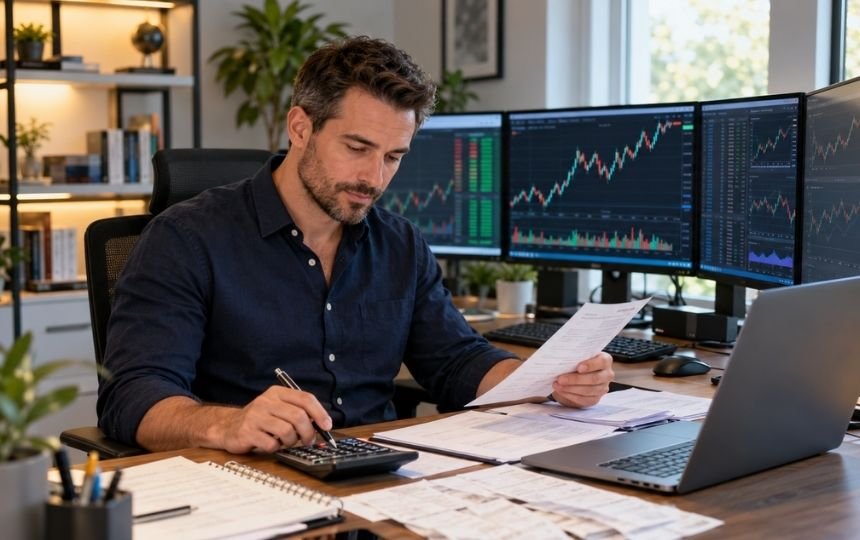
Most traders pay more tax than they need to simply because nobody has shown them what they can claim. As specialist accountants for traders, finding these allowable expenses is one of the most valuable things we do, and good financial management starts with knowing exactly what qualifies.

Expenses we commonly help traders claim include:

  • Broker fees, subscription fees and trading platform charges
  • Market data subscriptions and news feeds
  • Home office costs, including a share of your rent, utilities and internet
  • Education courses directly related to your trading
  • Accounting software and trading software, computer equipment and monitors, some of which may qualify for capital allowances rather than a simple expense

Every claim needs receipts and a clear business reason behind it, since HMRC wants to see a genuine business purpose behind each expense. Our accountants keep that record straight so you are covered if HMRC ever opens an enquiry, and we make sure our own accounting fees are themselves claimed as an allowable business cost.
The Allowable Expenses And Expense Claims We Help Traders Identify
WHY CHOOSE VEXO ACCOUNTING

WHY CHOOSE VEXO ACCOUNTING

More than just numbers — a partner in your success.

Proactive Advice

We spot opportunities and challenges early, helping you stay ahead.

Cloud Accounting

Secure, real-time access, anywhere you need it.

Fast Response Times

We value your time and get answers when you need them.

Fair, Transparent Fees

Plain English with no surprises. Fixed fees for total clarity.

WHY CHOOSE VEXO ACCOUNTING

Prefer to Speak to Someone?

Call Vexo Accounting today for clear, practical advice about your accounts, tax or business finances.

We Prepare Sole Trader Tax Returns And Handle Making Tax Digital For Traders

We Prepare Sole Trader Tax Returns And Handle Making Tax Digital For Traders

If you trade as a sole trader, your annual self assessment tax return is the main way you report your trading profits to HMRC. Our sole trader tax returns service covers everything from straightforward accounts through to traders juggling multiple platforms and currencies, and it comes with proper personal taxation advice, not just a filled-in form.

Making Tax Digital is changing how this works for sole traders. From April 2026, anyone with qualifying income over £50,000 must keep digital records using approved software and send quarterly updates to HMRC rather than one return a year. That threshold drops to £30,000 from April 2027, and £20,000 from April 2028, so most active sole traders will eventually be inside the system.

HMRC says it will start signing up eligible taxpayers for the 2026/27 tax year from September 2026. If quarterly reporting applies to you, our accountants manage this process for all our clients and handle the tax filings as part of your ongoing service, not as an extra bill every three months. Our accountants keep your sole trader tax returns filed early, not at the last minute.

Ready to Make Your Finances Simpler?

Speak to Vexo Accounting for clear, practical support with your accounts, tax, business finances and ongoing financial needs.

Should You Trade As A Sole Trader Or Through A Limited Company?

This is one of the biggest tax planning questions we get from full-time traders. Trading as a sole trader is simpler and cheaper to run, but a limited company can offer better tax efficiency once your profits reach a certain level, along with potential tax savings once corporation tax is weighed against income tax at higher rates. It is worth reviewing your tax planning each year as your trading grows, and every growing trading business reaches a point where the structure needs a second look. ONS figures show the number of registered sole traders in the UK fell by 4.1% between March 2024 and March 2025, while the number of limited companies rose by 1.8%, so this is a question more traders are asking each year, not fewer.

A limited company pays corporation tax on profits rather than income tax, and you can then choose how much to draw out as salary versus dividends. This gives you more control over your personal tax position and your personal financial planning, though it also brings annual accounts, payroll if you take on staff, and more paperwork than staying a sole trader. Full-time day trading often reaches the point where this structure makes more sense than staying a sole trader.

Our accountants advise every trader individually rather than giving generic guidance, and we look at your trading profits, your other income and your future plans before we advise either way. Some traders also want wider financial planning alongside the tax side, for example pensions or long-term investments, and we can point you toward the right support for that too.

Should You Trade As A Sole Trader Or Through A Limited Company
Here Is Our Process For Working With Traders Across The UK

Here Is Our Process For Working With Traders Across The UK

Our accountants start by reviewing your broker statements and getting a full picture of your trading activity for the year. From there, we confirm your tax position, prepare your tax return or quarterly submissions, and file everything with HMRC on your behalf, keeping your business finances organised throughout the year.

Reconciling broker statements by hand is time-consuming, particularly for anyone trading forex or running high volumes through several trading platforms. Our accountants handle that reconciliation for you, so nothing gets lost between your broker and your tax return, and your financial affairs stay organised year-round rather than becoming a scramble every January. We also help you set aside funds for your tax bill throughout the year, and planning ahead like this often creates real savings compared with scrambling at the deadline.

Once you are a client, you get a dedicated point of contact rather than a call centre queue. We aim to reply to UK traders on the same day wherever possible, especially during tax season when questions tend to pile up. If you take on staff as your trading grows, we can also run your payroll.

Need Help With Your Accounts or Tax?

Our team can provide straightforward advice and tailored support to help you stay organised, compliant and confident about your finances.

How Much Does An Accountant For Traders Cost in the UK?

A standard self assessment tax return with trading income typically costs between £250 and £600 a year, depending on how many trades, platforms and currencies are involved. Traders needing full annual accounts, a company tax return or ongoing bookkeeping support usually pay between £600 and £1,500 a year, or a fixed monthly fee within a similar range. Whether your trading is a side business or your main income, every business is different, so we quote based on your actual complexity.

This is a rough guide, and your actual cost will vary depending on your trading volume, your record-keeping, and the exact support you need. Our accountants agree fixed fees before any work begins, and the savings in avoided penalties usually outweigh the fee many times over, so there are no surprises on your invoice. These figures reflect what our services typically cost across different levels of support.

How Much Does An Accountant For Traders Cost in the UK
Ready to take the stress out of your finances
Ready to Take the Next Step?
Book a free consultation and discover how we can help your business grow.
Here Is Why Traders Across The UK Choose Vexo Accounting

Here Is Why Traders Across The UK Choose Vexo Accounting

Our experienced team includes chartered accountants who understand trading, not just tax law in general, and you get direct access to those chartered accountants rather than a junior team member. We know the difference between a day trader working in shares and a forex trader running a multi-currency account, and we support sole traders and limited companies alike. Most accountants treat trading income like any other self-employment, and ours don't. You will always deal with real accountants, not a script. As an experienced accountancy firm, we provide specialist support tailored to traders.

Our accounting services, our tax planning services and our support services are all built around traders, and we are active across the wider financial services industry, not just trading. We understand day trading, forex trading and longer-term investing, and we tax each one correctly, staying current as HMRC's rules change, including the rollout of Making Tax Digital, so you are never caught off guard by a new filing requirement.

Our accountants assist traders with everything from their first tax return to complex multi-platform portfolios, and every client gets clear, honest, professional advice on their tax position and their trading business, with no jargon and no guesswork. Our onboarding process is quick, usually a short call and a look at your last return, and we keep client numbers manageable so existing clients always get a fast, personal response. That is what makes us accountants for traders first, and general accountants second.

Ready to Make Your Finances Simpler?

Speak to Vexo Accounting for clear, practical support with your accounts, tax, business finances and ongoing financial needs.

Get A Free Quote From Vexo Accounting For Your Trading Tax Return

If you want an accountant who actually understands trading, get in touch with our accountants at Vexo Accounting today. Tell our accountants how you trade, how often, and what support you need, whether you are a sole trader or run things through a company, and we will come back with a free, no-obligation quote.

We work with traders UK-wide, so wherever you are based, we can help. Find out more about our services and request your free quote from Vexo Accounting now, and get your trading tax return sorted this tax season properly and every one after it.

Get A Free Quote From Vexo Accounting For Your Trading Tax Return
FAQS

Frequently Asked Questions

Clear answers to the most common questions about our accounting services.

How do I know if I am trading or investing for tax purposes?

Knowing whether you are trading or investing for tax purposes depends on the facts of your activity, including how often you trade, how long you hold positions, and whether trading is your main source of income. Our accountants assess these factors before deciding whether your profits should be treated as trading income or capital gains.

Are day trading profits taxed as income or capital gains in the UK?

Day trading profits are often treated as trading income rather than capital gains when HMRC considers the activity to be a trade. The correct treatment depends on your circumstances, so we review your trading activity before preparing your tax return.

How is forex trading taxed in the UK?

Forex trading tax in the UK depends on the type of trading and whether HMRC treats your activity as investing or a trade, with gains potentially falling under capital gains tax or income tax. We review your forex activity, platforms and trading pattern to apply the correct tax treatment.

Is spread betting tax free in the UK?

Spread betting is generally free from capital gains tax and income tax for UK traders because HMRC generally treats it as gambling rather than trading. The position differs for CFDs and standard forex, so we separate each activity when preparing your trader tax return.

What expenses can traders claim against their trading income?

Expenses traders can claim may include broker fees, trading platform charges, market data, relevant software, trading education and qualifying home office costs. Each expense needs a genuine business reason and appropriate records to support the claim.

Should I trade as a sole trader or through a limited company?

Choosing between a sole trader and limited company structure depends on your trading profits, other income and future plans. We compare the tax position, administration, and extraction of profits for your circumstances before advising which structure may be appropriate.
Business growth chart icon

Let's Build Your Success Story

Get expert advice and the support to take your business further.
Contact Us
quotes@vexoaccounting.uk
UK